Writing is a complex and cognitively demanding skill, yet it is often one of the most challenging areas to...
Writing is a complex and cognitively demanding skill, yet it is often one of the most challenging areas to teach and assess effectively. This conference brings together leading research and classroom practice to explore what truly makes a difference...
Writing is a complex and cognitively demanding skill, yet it is often one of the most challenging areas to teach and assess effectively. This conference brings together leading research and classroom practice to explore what truly makes a difference in writing instruction.
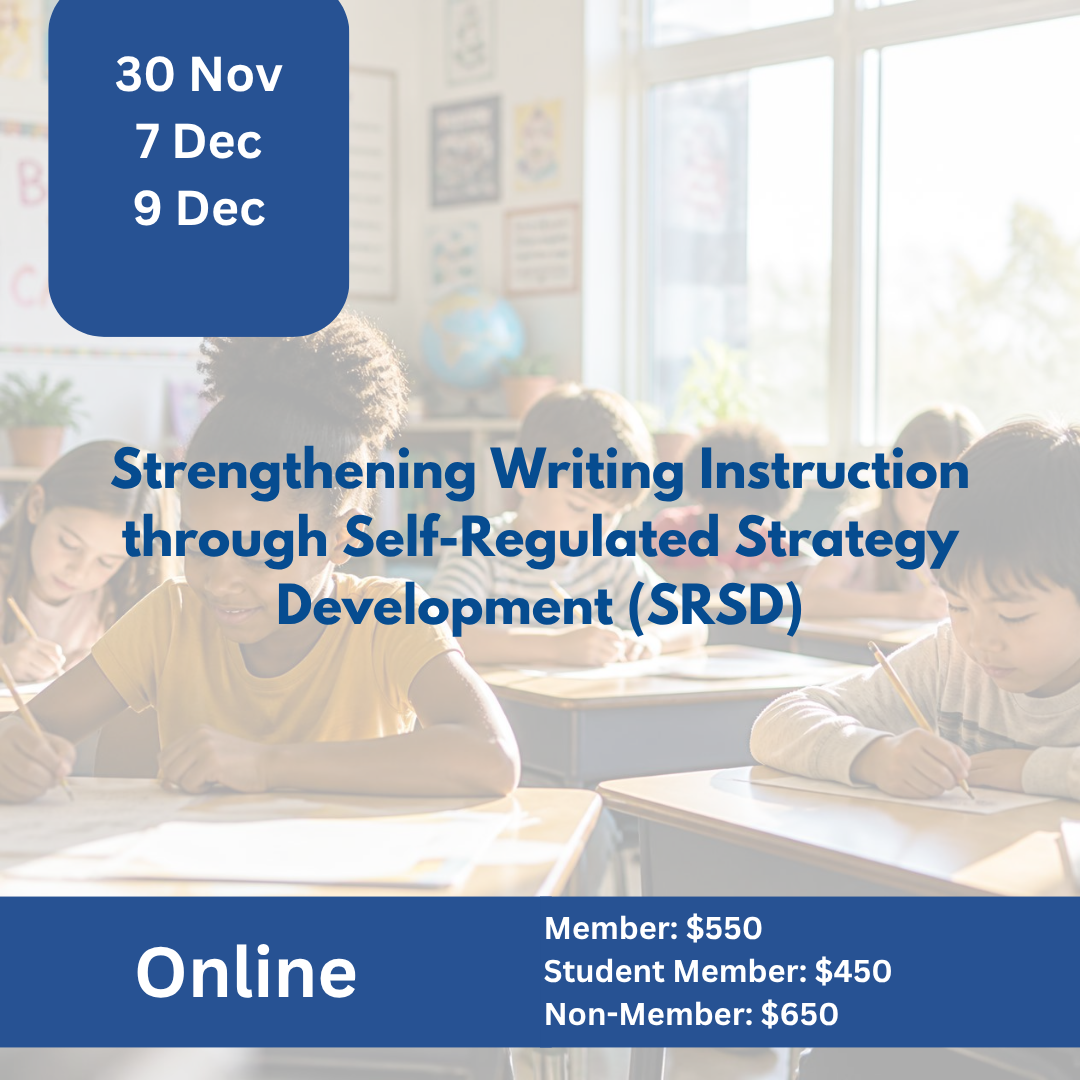
Grounded in evidence, sessions will examine high-impact approaches including explicit instruction, structured writing frameworks, and the role of Self-Regulated Strategy Development (SRSD) in supporting students to plan, organise, and regulate their writing.
Participants will gain practical, classroom-ready strategies to improve student outcomes across year levels, with a focus on supporting struggling writers and ensuring all learners can develop as confident, capable communicators.
**This webinar will be recorded and available for 30 days after the event**
Dates:
Wednesday 17th June 10 am - 3 pm AEST (30 min lunch break provided)
Thursday 18th June 10 am - 1 pm AEST
Cost:
LDA Member: $250
LDA Student Member - $200
Non-Member - $300
Course Program
Day 1: Wednesday 17th June, 2026
Session 1: 10 am -11:30 am
High Impact Writing Instruction: The SRSD Approach
Effective writing instruction requires more than teaching text structures—it involves explicitly supporting students to plan, organise, and regulate their thinking throughout the writing process. This session explores how Self-Regulated Strategy Development (SRSD) provides a structured, evidence-based approach to improving writing outcomes for all students across Grades 1–12.
Self-Regulated Strategy Development (SRSD) is a genre-level framework for teaching writing with the highest effect size of any writing approach researched to date. With over 200 research studies worldwide, and based on the research of Dr Karen Harris, the SRSD framework has enabled teachers to transform the writing trajectory of students all over the world. Consisting of six stages of instruction in a gradual release of responsibility model, the cornerstone of SRSD lies with the self-regulatory strategies that students are taught to mastery. The impact of this is a reduction in cognitive load, increased motivation and self-efficacy, and a significant increase in students becoming skilled independent writers.
Designed for educators and school leaders, this session will provide practical insights into implementing high-impact writing instruction that is both systematic and responsive to diverse learner needs.
Session 2: 11:30 am - 1 pm
Information coming soon
Session 3: 1:30 pm - 3 pm
Developing Structured Literacy Units that Integrate Word-, Sentence-, and Text-Level Instruction (Jacinta Conway)
This session explores how to design Structured Literacy units that integrate word-, sentence-, and text-level instruction to improve writing outcomes in the middle years. It focuses on the role of explicit, systematic teaching in connecting spelling, vocabulary, and syntax to support sentence construction and overall text development. Participants will gain a clear, practical framework for moving beyond isolated skill instruction to a cohesive approach that builds both content knowledge and literacy skills. The session will demonstrate how structured routines, sentence-level teaching, and retrieval practice can be embedded within units of work to develop accuracy, fluency, and control in writing. This approach supports all learners, particularly those who require more explicit and integrated instruction to succeed.
Day 2: Thursday 18th June, 2026
Session 1: 10 am - 11:30 am
Let’s Write: Using Think Alouds to Elevate Writing Instruction in the Classroom (Barbara Friedlander)
Writing is a critical life skill, and students need explicit tools to become confident, independent writers. Self-Regulated Strategy Development (SRSD) is an evidence-based approach that supports students through planning, drafting, and revising while building metacognitive awareness and self-regulation. In this session, we will focus on the powerful modeling and think-aloud stage of SRSD, where teachers make the invisible thinking of writers visible—helping students understand not just what to write, but how to think as writers. Let’s elevate writing instruction together!
Session 2: 11:30 am to 1 pm
Understanding and assessing handwriting fluency to support literacy (Karen Ray)
In this presentation, Karen will explore the link between early handwriting skills and literacy development, including impacts on writing. This session introduces an evidence-based model for handwriting fluency acquisition, video analysis of handwriting fluency using the Letter Form Assessment Version 2, and research findings on how handwriting intervention impacts on literacy for beginning writers. Participants will be equipped with a framework for understanding handwriting acquisition and approaches to effective assessment and intervention.
About the Speakers
Dr Karen R. Harris
Dr. Karen Harris has been an educator for over 50 years, first teaching 4th grade in a coal mining community in West Virginia and then adolescents in special education. She earned her doctoral degree at Auburn University in 1981. Since the 1980's she has developed and refined a model of instruction, Self-Regulated Strategy Development (SRSD), now researched in the areas of writing, mathematics, science, social studies, and more from 1st grade through college. She has authored over 200 books and articles, including the book Powerful Writing Strategies for all Students. With approximately 200 studies of SRSD across more than 12 countries, SRSD instruction has the strongest evidence base of any researched approach to writing instruction. SRSD is deemed evidence-based in the U.S., with moderate to large effects for narrative, persuasive, and informative writing, and is being implemented in numerous schools. SRSD instruction places strong faith in teachers and supports students in developing engagement, persistence, peer collaborations, self-efficacy for writing, motivation, academic language and discourse, self-regulation of the writing process, and differentiation across students. Dr. Harris' current research focuses on integrating skills needed for writing, such as handwriting, spelling, and sentence construction, with close reading to learn and then write across genres and content areas beginning in grades 1 and 2 (with successful ideas from Kindergarten teachers as well).
Julie Scali
Julie Scali is a nationally recognised literacy consultant, author, and founder of Literacy Impact™, with more than 25 years of experience in evidence-based literacy instruction, school improvement, and Response to Intervention (RTI/MTSS). In 2025, she received the Learning Difficulties Australia (LDA) Award for her outstanding contribution to improving outcomes for students with learning difficulties.
Julie has worked across Australia, the United Kingdom, and Northern Ireland as a classroom teacher, Deputy Principal, SENCO, Support Teacher (Learning Difficulties), curriculum leader, and system-level advisor. Through Literacy Impact™, she partners with schools and systems to implement sustainable, research-aligned literacy practices and has led large-scale...