Writing is a complex and cognitively demanding skill, yet it is often one of the most challenging areas to...
Writing is a complex and cognitively demanding skill, yet it is often one of the most challenging areas to teach and assess effectively. This conference brings together leading research and classroom practice to explore what truly makes a difference...
Writing is a complex and cognitively demanding skill, yet it is often one of the most challenging areas to teach and assess effectively. This conference brings together leading research and classroom practice to explore what truly makes a difference in writing instruction.
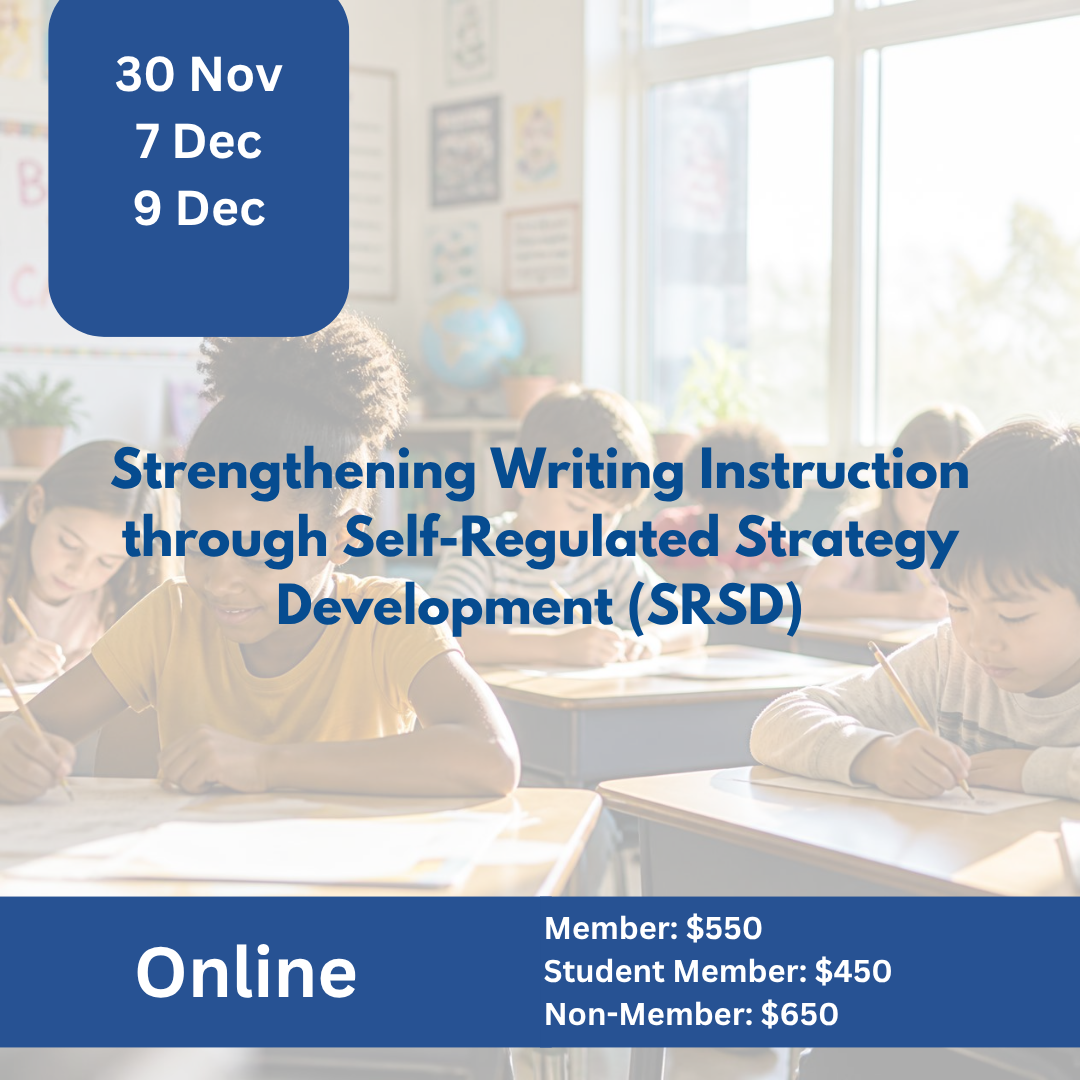
Grounded in evidence, sessions will examine high-impact approaches including explicit instruction, structured writing frameworks, and the role of Self-Regulated Strategy Development (SRSD) in supporting students to plan, organise, and regulate their writing.
Participants will gain practical, classroom-ready strategies to improve student outcomes across year levels, with a focus on supporting struggling writers and ensuring all learners can develop as confident, capable communicators.
**This webinar will be recorded and available for 30 days after the event**
Dates:
Wednesday 17th June 10 am - 3 pm AEST (30 min lunch break provided)
Thursday 18th June 10 am - 1 pm AEST
Cost:
LDA Member: $250
LDA Student Member - $200
Non-Member - $300
Course Program
Day 1: Wednesday 17th June, 2026
Session 1: 10 am -11:30 am
High Impact Writing Instruction: The SRSD Approach
Effective writing instruction requires more than teaching text structures—it involves explicitly supporting students to plan, organise, and regulate their thinking throughout the writing process. This session explores how Self-Regulated Strategy Development (SRSD) provides a structured, evidence-based approach to improving writing outcomes for all students across Grades 1–12.
We will follow students as they learn how Self-Regulated Strategy Development (SRSD) instruction gives them power for writing and learning. How students use reading to learn and then to write across genres in grade levels 1-12 will be illustrated. Powerful reading, writing, peer collaboration, and self-regulation strategies will be explored. Examples of student learning and writing will be provided, as will sources, many free, that teachers and others can use to learn more about SRSD instruction and use this powerful approach in their classrooms.
Designed for educators and school leaders, this session will provide practical insights into implementing high-impact writing instruction that is both systematic and responsive to diverse learner needs.
Session 2: 11:30 am - 1 pm
Closing Writing Gaps in Small Group Settings with SRSD
Self Regulated Strategy Development (SRSD) is a genre level framework for teaching writing with the highest effect size of any writing approach researched to date. With over 200 research studies worldwide, and based on the research of Dr Karen Harris, the SRSD framework has enabled teachers to transform the writing trajectory of students all over the world. Consisting of six stages of instruction in a gradual release of responsibility model, the cornerstone of SRSD lies with the self regulatory strategies that students are taught to mastery. The impact of this is a reduction in cognitive load, increased motivation and self efficacy and a significant increase in students becoming skilled independent writers. With text level writing being an incredibly complex and cognitively demanding process for students, SRSD is a largely a missing piece of the puzzle in writing instruction and intervention. Join Julie Scali as she provides a top level overview of how teachers can feel confident in supporting students to be effective writers at the whole class level but also in how to close writing gaps in small group intervention settings where writing is otherwise challenging for students.
Learning intentions
To be familiar with the Not so simple View of Writing (Berninger et al) and understand the complexity of writing for all students; and consider the added complexities for students with EALD, ADHD and other diverse backgrounds.
To be able to recall the components of SRSD strategy mnemonics of TREE, TIDE, WWW, POWRE, ARMS and COPS with some accuracy by the end of the session
To have an understanding on how whole class text level instruction with SRSD can be adapted to small group or 1:1 intervention
To view a demo mini lesson on how to identify the structural parts of a persuasive text, to backward map taking notes onto a graphic organiser
To have an understanding of the research base of SRSD in tier 2 instruction and how we can adapt whole class instruction to a small group intervention setting
To understand how a writing sample can be analysed against curriculum and NAPLAN marking guide rubric to determine next steps for small group writing instruction or intervention
To see an example Tier 2 Group Education Plan with SMART targets for text and sentence level writing
To see a snapshot of an SRSD planning unit that can be used with fidelity in implementing small group text level writing intervention through SRSD
Session 3: 1:30 pm - 3 pm
Developing Structured Literacy Units that Integrate Word-, Sentence-, and Text-Level Instruction (Jacinta Conway)
This session explores how to design Structured Literacy units that integrate word-, sentence-, and text-level instruction to improve writing outcomes in the middle years. It focuses on the role of explicit, systematic teaching in connecting spelling, vocabulary, and syntax to support sentence construction and overall text development. Participants will gain a clear, practical framework for moving beyond isolated skill instruction to a cohesive approach that builds both content knowledge and literacy skills. The session will demonstrate how structured routines, sentence-level teaching, and retrieval practice can be embedded within units of work to develop accuracy, fluency, and control in writing. This approach supports all learners, particularly those who require more explicit and integrated instruction to succeed.
Day 2: Thursday 18th June, 2026
Session 1: 10 am - 11:30 am
Let’s Write: Using Think Alouds to Elevate Writing Instruction in the Classroom (Barbara Friedlander)
Writing is a critical life skill, and students need explicit tools to become confident, independent writers. Self-Regulated Strategy Development (SRSD) is an evidence-based approach that supports students through planning, drafting, and revising while building metacognitive awareness and self-regulation. In this session, we will focus on the powerful modeling and think-aloud stage of SRSD, where teachers make the invisible thinking of writers visible—helping students understand not just what to write, but how to think as writers. Let’s elevate writing instruction together!
Session 2: 11:30 am to 1 pm
Understanding and assessing handwriting fluency to support literacy (Karen Ray)
In this presentation, Karen will explore the link between early handwriting skills and literacy development, including impacts on writing. This session introduces an...