Description
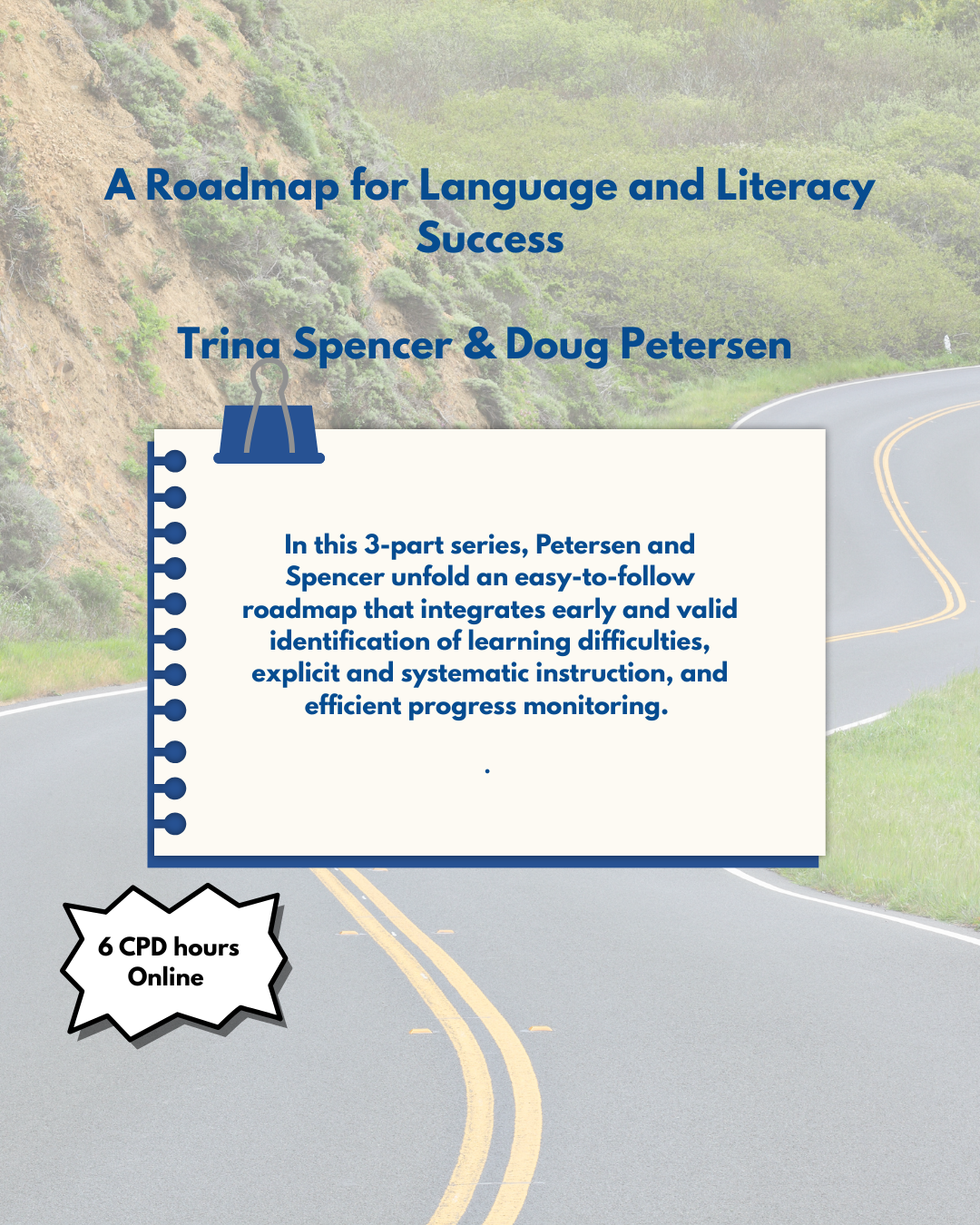
In this 3-part series, Petersen and Spencer unfold an easy-to-follow roadmap that integrates early and valid identification of learning difficulties, explicit and systematic instruction, and efficient progress monitoring. They aim for precision services that amplify impact.
Session 1: Get on the Right Track by Measuring What Matters Quick and clear identification of dyslexia and developmental language disorder (DLD) is complicated by their complexity and overlap in young learners. Misaligned and imprecise assessment instruments create slowdowns and cause wrong turns along students’ educational highway. In this session, Petersen and Spencer will guide participants to survey the various instructional routes that depend on the sufficient understanding and valid measurement of learning difficulties. They will contrast (traditional) static assessment with (innovative…or maybe even revolutionary) dynamic assessment. Using dynamic assessment, educators can take short cuts that avoid unnecessary detours, especially for culturally and linguistically diverse students. They will finish the session by introducing a new diagnostic and screening instrument that reduces the time to destination (i.e., learning success) by precisely and validly measuring learning at the core of dyslexia and DLD.
Session 2: Accelerate Learning with Multi-tiered, Explicit, and Systematic Language Instruction Skilled reading (i.e., reading comprehension) is the product of word reading and language comprehension. There has been a renewed interest in and application of structured literacy for word reading in classrooms across the globe. Although that gets reading instruction out of neutral, to truly accelerate academic achievement among students with diverse learning needs, language comprehension also needs to be addressed explicitly and systematically. Since the diversity among students is tremendous, it would be inappropriate to put all of them on the same slow bus (low intensity instruction). This one-vehicle-fits-all approach delays students with learning difficulties from achieving academically or closes the road altogether. In this session, Spencer and Petersen will explicate an example (with research findings) of structured literacy for language comprehension that ensures intensity of instruction is delivered based on individual need. For those who need to take an agile sedan (targeted intervention) or a speedy motorcycle (individualized support), this means getting on the expressway of learning so they can meet up with their peers at the destination.
Session 3: Follow the Compass with Progress Monitoring When landscapes are unfamiliar or obscured, orienting tools are needed to keep you on course. Progress monitoring is the educational compass that makes sure students are learning. Along the intervention route, checking the compass regularly helps educators recognize when progress is made and when it isn’t. In this session, Petersen and Spencer will emphasize how the data from regular progress monitoring of both word reading and language comprehension can inform intervention planning and ongoing course corrections (when necessary). They will spotlight a comprehensive suite of assessments that is free to download, easy to use, and addresses all aspects of language and literacy for students as young as 3-years-old and into 8th grade.

Reviews
There are no reviews yet.